
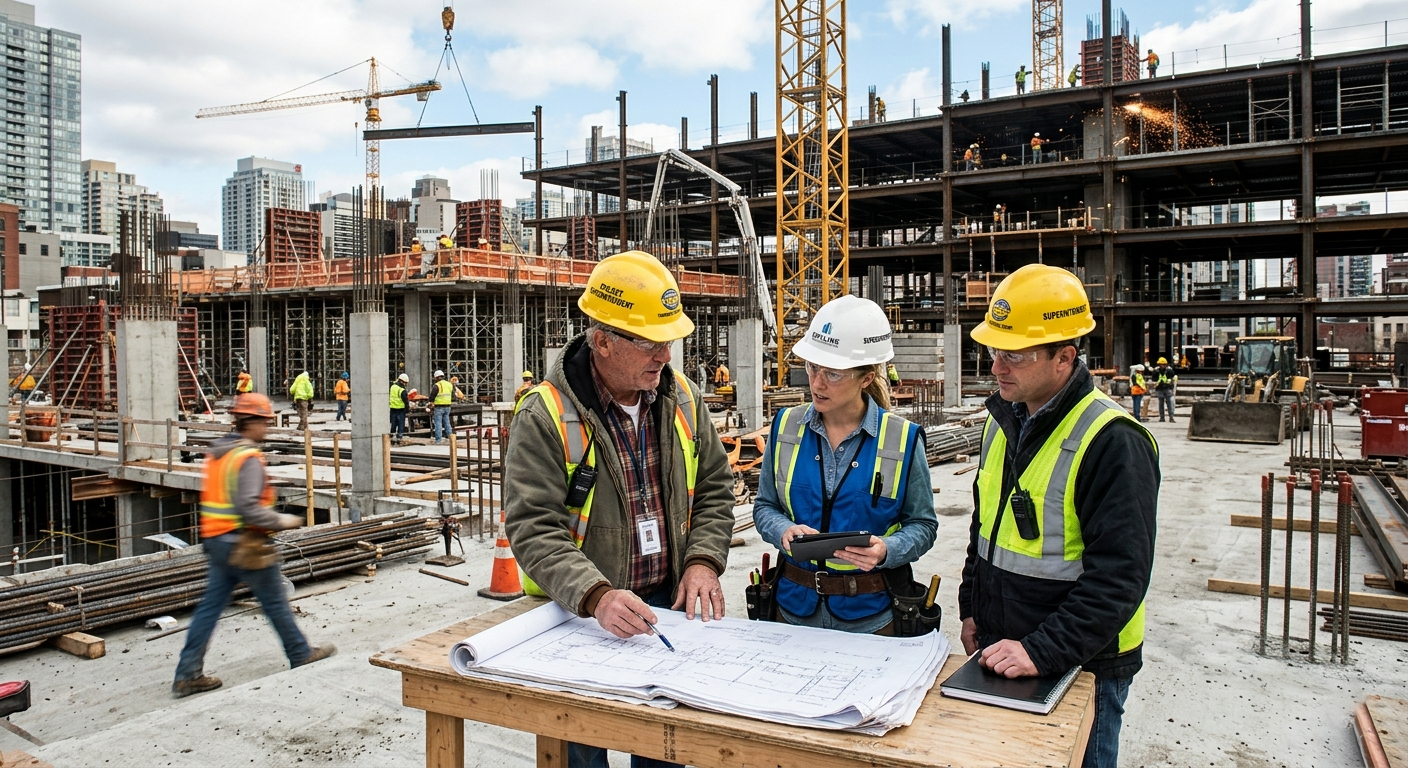
Project Superintendents occupy one of the more demanding positions on a construction site. They manage the day-to-day reality of delivery - trade coordination, resource allocation, sequencing, compliance, and all the pressure that sits between a programme plan and what actually happens on site. When they consider a career move, their priorities are shaped by that experience. They know what good looks like and they know what it costs when it is not there.
Here is what we consistently hear from experienced Project Superintendents across Ireland and the UK.
An environment where their decisions carry weight
Superintendents make a large number of operational decisions every day - on sequencing, on trade priorities, on how to handle clashes between resources and programme. What they look for is an organisation where those decisions are respected and acted on. When every call needs to travel upwards for approval, or when decisions made on site are routinely overridden without explanation, the role becomes reactive and wearing. Experienced Superintendents are specific about this when assessing a new position.
A programme that was built for the site, not the tender
Unrealistic programming is one of the most consistent frustrations raised by Superintendents. Professionals at this level read programmes carefully before committing to a role. When sequencing does not reflect real site constraints, when access periods are optimistic, or when there is no float built in for typical site variability, they know from experience where that pressure will land. A programme that has been built honestly - with input from site leadership and a realistic view of the work — is one of the clearest signals that a business takes delivery seriously.
Clear structure between functions
Superintendents work at the intersection of engineering, commercial, and site delivery. When those functions operate in clearly defined lanes — when scope is understood, information moves reliably, and queries are resolved at the right level - coordination is hard work but manageable. When roles and responsibilities are undefined or overlapping, a Superintendent becomes an informal mediator as well as a site manager. Most have done that job before and would rather not do it again.
Well-managed subcontractor relationships
The quality of a business's supply chain relationships has a direct impact on how a Superintendent's working week runs. Payment culture, communication standards, and how commercial disputes are handled all shape the site environment day to day. Experienced Superintendents have worked across enough contractors to know the difference between a supply chain that is managed well and one that is not - and it factors into how they assess a potential employer.
Continuity beyond the current project
Construction is project-based and most Superintendents accept the uncertainty that comes with that. What matters is whether there is a credible workload behind the current programme. This does not mean guaranteed long-term security -that is rarely realistic in the sector. But it means being able to see what a business has in its pipeline and have a reasonable expectation of what comes next. Businesses that can offer that picture are more attractive to experienced Superintendents who are making a considered move, not just looking for the next short-term contract.
What this means for construction businesses
Project Superintendents are experienced, practical professionals. What attracts them is straightforward: real authority on site, a programme that holds up to scrutiny, a clear organisational structure, and a business that runs well below the surface. The challenge for employers is not in understanding what they want - it is in demonstrating it convincingly during a relatively short interview process. The businesses that do this well tend to attract and retain the strongest site leadership.
Our specialists work with experienced Project Superintendents across Ireland and the UK. Reach out to our team to discuss your requirements or your next career move.