

By the start of 2026, Ireland’s construction skills shortage is no longer a background issue. It is a practical constraint on how much work the sector can deliver, how projects are priced, and how programmes are planned.
The Construction Industry Federation (CIF) Construction Outlook Survey Q4 2025 confirms that demand remains active across residential, non-residential, and infrastructure projects, but workforce availability continues to limit delivery capacity.
What the Data Signals Going Into 2026
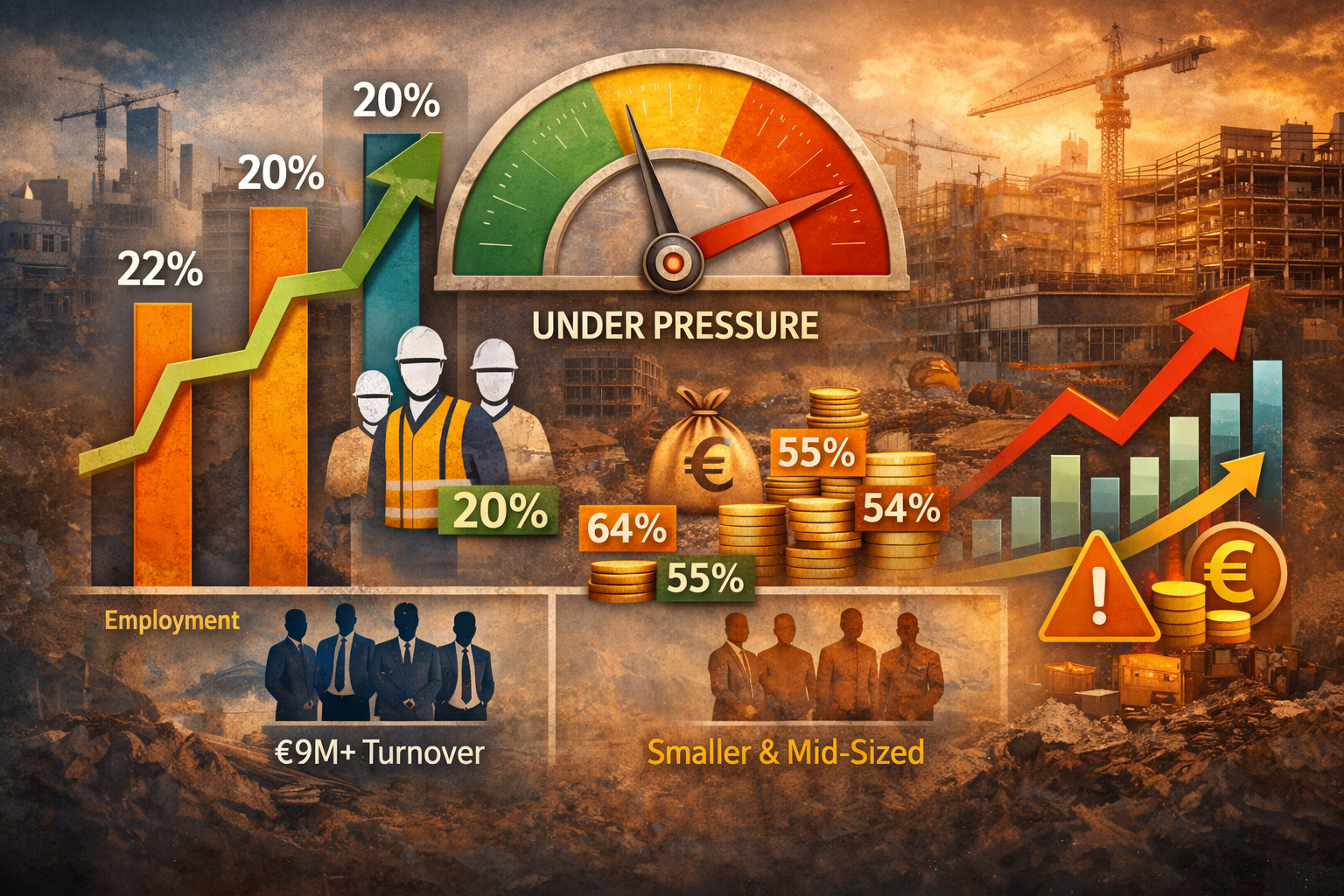
The latest CIF data shows a sector that is still moving, but under sustained pressure.
Key findings from Q4 2025 include:
- 22% of companies reported a year-on-year increase in employment
- 20% expect employment levels to rise in the near term, while the majority expect no change
- 64% experienced increased labour costs, with 55% expecting further increases
- 69% reported higher raw material costs, with pricing pressure expected to continue
- Project pricing increased for 54% of firms, with 43% anticipating further rises
Larger companies (€9M+ turnover) remain the most confident on turnover and new orders, particularly in civil engineering, infrastructure, and specialist contracting. Smaller and mid-sized firms continue to feel cost pressure more acutely.
Where Skills Pressure Is Most Acute
The shortage is not evenly distributed across the sector.
CIF data and industry feedback point to sustained pressure in:
- Electrical and mechanical trades
- Specialist installation and technical disciplines
- Site supervision and coordination roles
- Quantity surveying and commercial management
- Project management on complex and regulated builds
These pressures are most visible in infrastructure, data centre delivery, healthcare, and advanced non-residential projects, where experience and coordination directly affect risk, sequencing, and compliance.
Civil engineering and specialist contracting recorded the strongest year-on-year turnover growth in Q3 2025, yet these same areas remain exposed to capacity constraints heading into 2026.
Why the Gap Is Persisting
The shortage is structural rather than cyclical.
Several factors continue to reinforce it:
- Training and qualification timelines remain long, particularly for advanced roles
- Labour mobility pulls experienced workers toward international and export-led projects
- Workforce concentration around Dublin and the East leaves regional gaps elsewhere
- Project complexity increases the need for multi-skilled and digitally competent teams
While employment expectations remain broadly positive, growth is cautious, reflecting uncertainty around available skills rather than a lack of work.
Impact on Projects and Costs

On live projects, the effects are already clear.
- Programmes are increasingly shaped around workforce availability rather than ideal sequencing
- Tender pricing reflects sustained labour and materials inflation
- Quality assurance becomes harder when specialist capacity is stretched or substituted late
With labour and materials costs still rising into Q4 2025, cost certainty remains a challenge for projects planned for delivery in 2026.
How Career Expectations Are Shifting
For professionals already working in the sector, the imbalance is reshaping career dynamics.
Demand is strongest for individuals who combine:
- Solid on-site or commercial experience
- Confidence working within regulated and high-risk environments
- Familiarity with digital tools, reporting frameworks, and modern construction methods
These profiles are increasingly prioritised on long-term programmes, complex developments, and international projects, rather than short-term site cover.
Planning for 2026
CIF identifies labour availability as one of the most persistent risks facing the construction sector into 2026. Addressing it requires earlier workforce planning, closer alignment between training and demand, and realistic assumptions about capacity when projects are commissioned.
As CIF Director General Hubert Fitzpatrick has noted, the construction sector remains central to Ireland’s economic delivery, but its ability to meet national housing and infrastructure targets depends on having the skills base in place.
See the full CIF report here: https://cif.ie/reports/
For companies preparing 2026 programmes, and professionals considering their next move within the sector, the message is consistent. The work is there. Capacity remains tight. Planning decisions made now will shape delivery outcomes over the next cycle.

